Here's a piece I wrote on the songs on the new album for
Mess & Noise..
Annelets
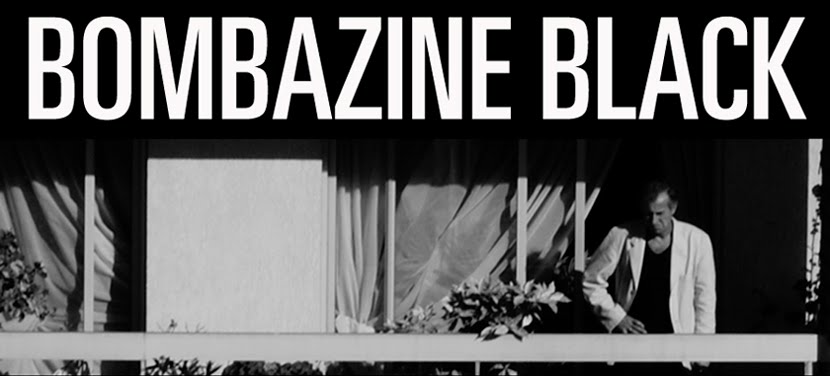
In our second year in Paris Jayne and I lived on Rue des Annelets in the 19th arrondissement, just behind Belleville. The apartment building on the album cover was across the road from our place, and every morning the Miami Vice guy would go out onto his balcony and smoke cigarettes. There’s something about Jayne’s photo that reminded me of a Hitchcock film, and once we had decided to call the record Motion Picture I knew that photo would be perfect. It seems like he could be anywhere.
I had arranged to do some recording with Parisian vibraphone whiz Michael Emenau (MNO). The plan was that we’d meet at his studio (in the basement of a dodgy building near the Père Lachaise) and just improvise and see if we could come up with some songs, record them and put them out. Bang - just like that - old-school jazz vibe.
But the night before the session I freaked out and thought I’d better come up with a few bits, a chord progression at least, something to go in with, otherwise we could be in there for hours while I try and figure out something to play. Grant Green I ain’t.
So I sat on our couch in front of the French news and came up with the parts for Annelets. On the recording with MNO the ‘change’ was repeated a few times, and the ending was just a middle eight, but I moved it all around when I got in the room with the band in Melbourne. It seemed more disciplined to keep the change short, and dreamier to let the middle eight be a whole part onto itself, almost its own song. I really wanted that part to sound like a 70s film score, maybe Midnight Cowboy or something like that.
The Bel Esprit
I wrote The Bel Esprit on the same night as Annelets and it has pretty much remained the same as I wrote it then. The ending blew out a bit once I started playing it with the guys in Melbourne but it’s still pretty long on the version with MNO. I have a high tolerance for repetition; I love what happens after you think something surely can’t continue on without a change. For me it then starts to become meditative and comforting, and sometimes funny and joyful.
Once I got the band involved I really wanted to keep my part very simple and straight and let the madness of Eugene [Ball]'s trumpet and Jayne’s piano surround it. I hoped this would help it feel loose and organic while still giving you something in the song to hold onto, even if you couldn’t actually hear that part.
I worried about the ‘chorus’ part in this song for a while, it’s pretty straight, definitely the straightest part on the record, and in the end it was that aspect that saved it. I thought, if you’d made it this far into the record you deserved a little breather, a little bit of pop before it opened out again.
Springheel Sunset
When we were in America showcasing the first record we ended up with a day off in LA. A couple of songs had morphed into these full band numbers and I really wanted to try and get them on tape. A friend of a friend was an engineer at Sunset Sounds and lo and behold they had a studio free on our day off. So we went in and recorded Sea-Dark, Springheel and a new song, Roosevelt.
Sea-Dark didn’t make the album in the end - I couldn’t quite get it to sit - but Springheel came out really well. The song was very live and organic and we really seemed to capture the feeling within the group at the time. We were having such a great time. In theory the song should have been quite hard to record - almost 12 minutes and with two distinct parts - but because we had been playing so much and were having so much fun, it was a breeze. Chris [Reynolds, engineer] pressed the record button and 12 minutes later it was done.
I added a few string parts to the middle verse when we got back to Melbourne, and then Eugene added his trumpet, but apart from that it’s exactly as we played it that day in LA.
Roosevelt
I had come up with the basic progression for Roosevelt while we were on the road in the US and I really wanted to see if we could pull a whole song together completely off-the-cuff while we were in the studio. And we did! We came up with the change and the basic arrangement on our lunch break, played it once and then recorded it. Jayne came up with her fantastic piano line mid-take on the grand old Steinway. It’s the most pure recording I’ve ever done and listening to it now I still marvel at what we were able to achieve in half an hour.
Montmartre
I wrote Montmartre in a little office I rented above the Workers’ Club in Fitzroy last year. We had already recorded Springheel Sunset, Roosevelt and a band version of Sea-Dark in LA, and I had Annelets and Bel Esprit from Paris, so I figured I was three songs off a full record. I like short records, 8 songs, 35 minutes.
So I rented this little room and I set about writing three songs to finish it off. I came up with a new tuning - that always seems to spark off new ideas - and almost straight away I had the basic part for Montmartre down.
It somehow reminded me of this story I had heard in Paris about the bars in the red-light district around Montmartre and Pigalle, about the out-of-town guy that goes into one of these bars, for a beer or whatever, chats to a girl at the bar for an hour or so, and then gets presented with a 500 euro bill for her time, and a couple of Russian bouncers should he protest.
I told the story to the band as we were rehearsing it up and we managed to keep that kind of sinister feeling running through it. Jayne came up with the engaged signal keyboard part, almost like the guy had had his bank account cleaned out and was calling his wife to explain, but he can’t get through.
Dark Kellys
Dark Kellys was the second song I wrote up in the room above the Workers’. I had been reading Blood Meridian and thinking about Australian history and how we don’t have much fictional stuff written about the early days of white settlement here, the days of the gold rush and the bushrangers and all that - our Wild West. There’s the Peter Carey book of course and the odd film but nothing like the mountains of stuff the Americans have. I started imagining what it would have been like to have been living in Beechworth in the late 1800’s and maybe falling on the wrong side of the law, and then maybe having a falling out with the Kelly Gang and what mean bastards they would have been to have chasing you.
So I wrote Dark Kellys about that. The basic narrative is that you’re on the run, hiding out in the bush, petrified that the Kellys are coming to get you. The slow build at the start is the coming storm. It’s night. You think you hear them and then the chorus - they come riding over the top of the hill and they’re on top of you. Guns and knives and war.
The New Ruse
Once I had Montmartre and Dark Kellys I figured I was one song off completing the album, and that we probably needed something a little up-tempo. Something short. The New Ruse was one of a few songs that came out. I thought it was ok but then Danny [Tulen]'s idea to have the stop-start drumming really made it something and I knew we had a song then. It seemed odd and different and exactly what the record needed. And then Miles [Browne] came up his bass line in the change which I think is the best part on the record. We recorded it in one or two takes at HeadGap [Studios in Melbourne].