Showing posts with label Cageling. Show all posts

Friday, December 24, 2010

A Bombazine White Xmas

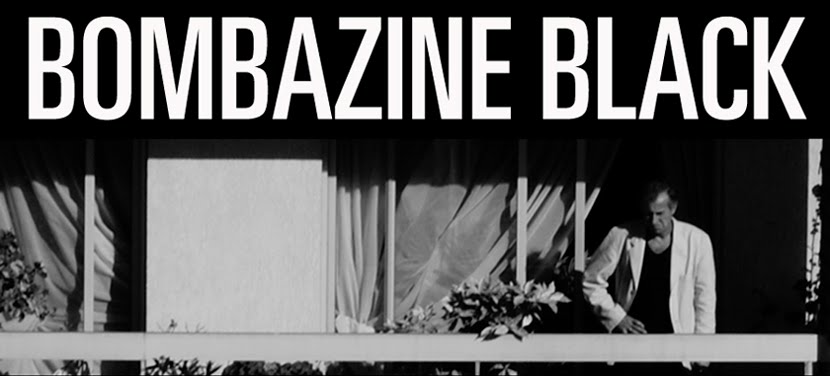
Jayne and I are holed up in an apartment in Montmartre playing chess and writing songs for the next Bombazine Black album.  Snow is falling as I type and it's almost time to break out the vin chaud.

It's a complete coincidence that in the year we release a song called Montmartre we find ourselves here for Xmas - life moves in mysterious ways doesn't it?  Next year we'll release a song called the Maldives and let's see what happens.

Among other things it seems the perfect time to have a bit of a look back on the year and see if we actually did anything, or am I just tired because I'm suffering from mono.

Thank you to everyone that came to shows, bought records, gave encouragement or even downloaded our songs illegally.  It's just nice to be in your life.


2010: A Re-Cap

January

Matt, Dan and Daryl's 'other' band Gersey begin rehearsals for the Pavement Australian shows in March.


February


Gersey play their first show since 2007 at The Toff in Town, Melbourne.


March

Gersey tour Australia with Pavement and have an absolute blast.  Lots of photos up on Facebook.


April

Matt composes the score and Jayne is a twisted sister in the theatre production Cageling, conceived by the unstoppable force that is The Rabble. It opens to rave reviews and full houses at Melbourne's Forty-Five Downstairs. A "nuanced sound design" said esteemed theatre critic Alison Croggon among other things.


Dan and Daryl's other other band Tall Buildings record their debut album at SoundPark in Northcote.


May

Mixing of second Bombazine Black album Motion Picture completed by Tim Whitten in Sydney.


June

Cageling opens in Sydney to more rave reviews.  Curtain Call say the score is "one of the most engrossing and cohesives aspects of the work."
The Sydney Morning Herald said it was "a ringing score." 


July

Motion Picture is mastered by Roger Siebel at SAE in Arizona.

Matt and Marty from Gaslight Radio start record label/distro house Letters & Tapes.


August

Jayne completes the artwork for Motion Picture, with layout by Iain Downie.


Paris-based Bombazine Black bass player/drummer Taylor Holland releases a book of his photographs, Lignes.


September

Motion Picture is released to universal acclaim.  Wireless Bollinger called it "heartfelt, emotive music that trades in sincerity and timelessness" and The Music Blogs said "I’m a little speechless. This album is incredible."

You can read all the reviews for yourself here.


Bombazine Black perform the album launch show at The Toff in Town in Melbourne with The Marlon Winterbourne Movement and Sirens of Venice. The AU Review review the show and say "there are movies and there are motion pictures and the Melbourne based instrumental band led by Matt Davis of Gersey fame, proved that they are Scorsese."


October

Rehearsals begin in Berlin for theatre/dance piece Soft Landing that features music from both Bombazine Black records.


Letters & Tapes releases The Marlon Winterbourne Movement album Merry Go Round on the Moon.


November

Soft Landing opens in Berlin and sells out the season.

Tall Buildings finish mixing their new record with Sloth at Head Gap.  Expect the release early next year.


December

Matt completes score for Jonathan auf der Heide's new film The Day Before Yesterday.

Jayne publishes a book of her writing and artworks from The Existential Bunny Rabbit.


It snows in Paris.


Merry Xmas all, see you on the other side.

M

Sunday, August 29, 2010

Cageling - Sydney Morning Herald review

CRUEL, challenging, eerily beautiful, Cageling is derived from Spanish playwright Federico Garcia Lorca's The House of Bernarda Alba, the story of a widowed mother's imposition of an eight-year period of mourning on her five sheltered daughters - a rule that attains the level of tyranny.

Lorca's original play is present in fragments only, part of a text made up of passages from Ovid's telling of the Philomena and Procne story, a ringing score by composer Matt Davis, excerpts from the poems of Ana Rossetti, and a physical language that runs the gamut from the balletic to the palsied.

The action is in a sealed room, sparsely furnished, painted white, lit by stuttering fluorescent tubes. We observe them through a window that mother and daughters occasionally peer through. Perhaps they see us, perhaps not.

The opening passage is related in a series of wordless tableaux, with Alba as a kind of monstrous choreographer chivvying her daughters into correct postures and acceptable attitudes. All wear closely fitted black dresses and ballet pumps. Veils are drooped over their faces. A microphone is present though none feels willing or able to use it for 20 minutes or so.

Performance troupe The Rabble play a dangerous game here. There's no doubt the opening gambit builds a level of need in their audience - a need for release echoing the stymied desires on display - but it also sets up a barrier that is never truly broached, even when the repressive culture that Alba enforces explodes into mania and bestial savagery. Though
Cageling is fascinating to observe, its remoteness might be off-putting for some.

The shaven headed, somewhat priestly Daniel Schlusser is Alba and he gifts her with the monomaniac - almost comic - intensity of a James Bond villain. Dana Miltins, Jayne Tuttle, Mary Helen Sassman and Pier Carthew are the daughters and all maintain a seething stillness until, one by one, they rebel.

Like their convulsive take on Oscar Wilde's
Salome in 2008, Cageling is difficult work. It is also rewarding and likely to haunt the memory.

by Jason Blake

SMH link

Cageling - Bicycle User Goes Out review

Go bring the rabble, / O’er whom I give thee power, here to this place - Prospero (to Ariel), The Tempest, Act IV, scene one

The Rabble have been brought to CarriageWorks to present Cageling. Cageling is a physical exploration of the repression of grief and desire, set in an enclosed box with a perspex wall facing the audience, two seamless white walls on the sides, and a wall with a high window at the rear. When you enter the space, you are met with a cast of five. They are all in the box, wearing floor-length, black, Victorian, gothic dresses and black ballet slippers. They are lit with fluorescent lights, and arranged in an unsettling tableau. They are there as if waiting for the audience, but very little happens for the first fifteen minutes. Cageling is designed to leave you outside, distanced from the action inside this home, and it takes effort on the part of the audience to find a way into this private world. This is almost in complete contrast to the the last thing I saw in Bay 20, Matt Prest and Claire Britton’s Hole in the Wall in which you are literally invited inside the home. But, although you are left outside Cageling’s cage, if you are actively willing to find a way inside, you’ll be rewarded.

THE RABBLE are not controlled by Prospero, or Shakespeare for that matter, but they are controlled by another formidable magician, Fredericio Garcia Lorca.
Cageling’s urtext is Lorca’s play The House of Bernada Alba, a drama about a recently widowed mother, who controls her grief by dominating her children. This play is “smashed open” by THE RABBLE, and rearranged through the use of ballet, contemporary dance and hymn, and enhanced by stories from Ovid, thereby exposing the unconscious, affective underbelly of the Lorca’s text. But, we keep the mother and daughters and Dan Schlusser is terrifyingly good as Mother Alba.

Mother’s rules are no weeping and no secrets. A tension is established at the outset of the work between desire and action; if you do not act, you do not desire, and you do not grieve, if you do not cry. The flawed theory, of course, is that grief and desire will disappear if they can’t find expression, therefore as long as order is kept, tears are avoided, hierarchies are respected and instructions are followed everything will be OK. But, everything is clearly not OK. Within this world the only actions Mother allows are carefully choreographed: the poised movements of ballet and the perfectly harmonised hymn.
Cageling dramatises the Daughters/sons’ attempts to break free from these rules, and the Mother/father’s attempt to reinstate them. And, I use the word “dramatises” with all its conventional import in spite of the lack of the dramatic text. And I say Daughter/son, Mother/father because gender difference necessarily unclear because the work is about women without men, but who have internalised the patriarchal structure. (Actually, Women without Men by Shirin Neshat that played in the recent Sydney Film Festival, has some interesting affinities with Cageling)

There are so many dimensions to this performance, and this is because THE RABBLE put to use all the tools available to the performing artist–speech, song, silence, movement, tableau, dance, costume, gesture, vocal tone, makeup, properties, set,  lighting, sound–THE RABBLE treat each aspect of the artform with equivalent importance, no element dominates, each device in turn contributing to
Cageling’s emotional and physical assault.

Cageling
is extraordinary, it deserves much more time that I can give it here to unfold the dark matter that is explored in the white box. Cageling requires your active attention, I think the audience are given many ways in; the sound design, dance lighting and speech all had a refrain. If you miss those clues or willingly resist the offers, you might be literally left out in the cold. But, I love difficult theatre, I like being made to work to find meaning, I love work where meaning keeps emerging for days later and there are too many threads to possibly consolidate in one short review. For example, I didn’t even get mention the headstand and the upside down penis, so, perhaps the upside down penis can be your reward if you are willing to involve yourself in Cageling.

by
Jennifer Hamilton

http://bicycleuser.wordpress.com/2010/06/26/upside-down-penis/

Cageling - ABC Arts review

The Rabble's Cageling, a reinvention of Federico Garcia Lorca's The House of Bernarda Alba, is a sometimes puzzling curiosity which requires diligence to unravel, writes Jenny Blain.


‘To be born a woman is the worst punishment’ was the cri-de-coeur uttered by two of the five daughters in Federico Garcia Lorca’s The House of Bernarda Alba, first performed in 1945. It is also the catchcry which informs every heartbeat of The Rabble’s stylised reinvention of Lorca’s work called Cageling. As the name suggests, this production cleverly reifies entrapment applied to the female gender by its use of a sealed and claustrophobic cube to contain its message of cruel repression and seething passions. We must watch through a glass frontage at one remove, rather like peering at exotic creatures trapped in amber. 

The inanimate analogy is close to apt for the opening 15 minutes of Cageling. The brightly lit white cube presents us with a tableau of five figures clad in floor-length black and ballet shoes seemingly frozen save for the agitated fluttering of a Spanish fan. The occasion is the solemn observance of a funeral, that of the second husband of the mother Bernarda Alba. The figures – actually Bernarda Alba and her four daughters – could be mistaken for cloistered monks, an idea reinforced by the drawn-out, ringing refrain of temple bells. Two daughters create a sense of mystery as they sit immobilised in a corner, their heads covered with large white kerchiefs like escapees from a Magritte painting (I have discovered that white veils were worn for mourning in the 15th century by the Queens of France). The effect is gothic, meditative, hallucinatory and double-edged: the prolonged stillness and persistent bells create both calm and a tension of expectancy. The intense black and white imagery pits notions of death and oppression against those of freedom and the life-force; it also neatly references Lorca, who saw his play as a photographic documentary. Its graphic starkness signals impending drama, and indeed any illusions of a ‘normal’ grieving process are destined to give way to cruelty and calamity.

As the players begin to move into a choreography of ‘right’ attitudes and postures demanded by a matriarch wielding a cane it becomes abundantly clear that being a daughter in the house of Alba – now an outback Australian property where the burnt body of a fifth daughter Martirio, victim of a terrible bushfire, is on display in a jar – is indeed the worst imaginable punishment. Five trapped souls subjected to a family tradition where mourning is de rigueur for eight years and where, according to Alba’s terms, no grief must be shown – no tears or passion of any kind – is not only the height of absurdity but a perfect recipe for disaster. The tyranny of Alba looms large. Driven by rage and loathing to persecute her offspring, she is a slave to tradition, conformity, class prejudice and a belief that a woman’s place is in the home. Possession of money makes her an impossible snob: to her, money confers social superiority, a convenient excuse for her conviction that no-one measures up as a suitor for her daughters.

Her daughters have other ideas. In The Rabble’s version the unseen suitor Pepe el Romano, despite his betrothal to Angustias, the ugly but rich elder sister – who has inherited her wealth from her father, Alba’s first husband – has allegedly rogered all the daughters behind the chicken shed. The daughters are without exception mildly deranged, in their turn undone by jealousy, resentment, rage and pent-up sexual desire. The sickly Angustias (Mary Helen Sassman) has grown a beard, apparently in protest. Amelia (Jayne Tuttle) is restless, frustrated; she becomes violent when beaten by Alba, grabbing the whip and beating the surfaces of the set. The behaviour of her twin Magdalena (Dana Miltins) suggests repressed sexuality: during a dance routine she appears to commit suicide by wrapping a braid of hair around her throat. The youngest Adela (Pier Carthew) is a rebel who finally breaks her mother’s cane and who is punished for being in love with Pepe el Romano: when Alba contrives to shoot her lover, Adela, believing he is dead, hangs herself.

I think it is at this point that Alba, her authority gone with the broken cane, reasserts it by showing us that she does, after all, have balls. Her character as played by Daniel Schlusser makes this plain with a prolonged headstand to demonstrate what Jennifer Hamilton has dubbed the ‘upside-down penis’. It’s a confronting scene but it does drive home the idea of the controlling woman as having internalised a form of patriarchal power. Recalling Angustias’ manful beard and Adela played as a sweet youth, the bald and frocked Schlusser as Alba is the most spectacular of The Rabble’s playful gender inversions.

Macabre as Cageling may be, and despite a subtext of ghosts and werewolves and dark fairytales, nothing quite prepares us for the final scene, a diabolical homage to Ovid’s tale of Philomela – she whose tongue was sliced off by the sword of Tereus, her sister Procne’s husband. Here it is Alba who, in an act of terrible revenge towards her daughter Angustias – it can only be because she has a ticket to freedom – bites her tongue out. The shock caused by this hideous act finally smashes – in a metaphorical sense – the glass wall of separation. In a strange way it also acts to dissolve much of the nightmarish unreality of the many instances of violence we have already witnessed. Curtain call – in all its seemingly authentic blood and gore – managed to find a sympathetic audience.

The Rabble’s directors Emma Valente and Kate Davis have made of Lorca’s prototype an artwork, a sometimes puzzling curiosity (a Rubik’s cube?) which requires not only diligence to unravel, but some prior familiarity with Lorca’s original. There is much inspired panache invested in this work, a brave revisiting whose novelty, while retaining elements of the visceral and morbid, adds an overlay of challenging surrealism. My only criticism is a set that makes for a certain lack of immediacy. That said, Cageling, like its predecessor, reminds us forcibly of the destructive nature of power in the wrong hands, male or female.

http://www.abc.net.au/arts/stories/s2947020.htm

Cageling - Curtain Call review

Cageling is one of those productions that blurs the lines. Where does performance art begin? End? When does it cease to be a visual art installation? At what point does theatre take over? Let’s not go there. It doesn’t really matter. It is what it is. Which is something very arresting. It comes with the guiding catchphrase, ‘to be born a woman is the worst punishment’, and is veritably bursting with the most powerful imagery along those lines. It’s about oppression of women; by men, of course, but also other women, such as mothers. It is, according to The Rabble, its producers, a ‘reimagining’ of Federico Garcia Lorca’s, The House Of Bernarda Alba; albeit, for mine, a rather abstracted and liberally poetically licenced one, that comes reasonably hot on the heels of the success of ‘Salome: In Cogito Volume III’; not to mention ‘Corvus’.

To be frank, pretensions of reference to classic works, while typically, I suspect, a gambit to legitimise new and adventurous work, are too often tedious and can prevent it standing on its own merits, which might well be preferable. Here endeth the editorial. Or maybe not.

Suffice to say
Cageling is a reimagining in the way the bible is a reimagining of the word of God: it might be inspired, divinely or otherwise, by Lorca’s text, but that’s around about it, I’d suggest. In any case, as with any debate about what constitutes theatre, it’s of dubious consequence. Whether Lorca is an ‘undercurrent’, or his text has been ’smashed’ is of no relevance to the novice viewer. There are those, probably, who’ll walk in and out of this production without ever knowing about the Lorca references, or even who Lorca is, when he’s at home, in or around Granada. (Or was: he died pre-WW2, aged only 38.) Few will recognise Rosetti’s poem, or Ovid’s tale. We’re also told the piece is informed by Lorca’s essay on duende. Duende being a quintessentially Spanish concept, perhaps best embodied in, say, flamenco. It is, as best I can describe it, the proverbial dark night of the soul, embodied in music, whether this ‘music’ be sung, spoken, or otherwise impressed. The Cageling certainly exemplifies this sensibility, by dint, perhaps of the directors’ self-confessed obsession with gothica.

But, again, it’s not necessary we know, which is the folly of this background contextualisation. It’s a bit, or a lot, like curatorial notes, at an exhibition: one can have the purity, if you will, of one’s interpretation prejudiced or dictated by such; or eschew them, in deference to one’s own intellectual and aesthetic capacities. Where I do give credit to The Rabble and Cageling, in this respect, is is serving to open an old debate. Perhaps wound is a better word.

We walk into the capacious Bay 20 of CarriageWorks. Towards the back of the space is a box, a room, constructed of blonde timber, with a glass front. Inside are five performers, dressed in funereal robes; faces obscured by veils. (Is there an intentional, or accidental, allusion to oppression via the hijab, or burqa?!) They move very little, if at all. We hear a clanging cacophony of cymbal, chime and bell-like sounds. It’s slightly unnerving. This soundscape, by composer Matt Davis (who prefers to be known, Bond-like, as M, apparently) is one of the most engrossing and cohesives aspects of the work.

Not a lot happens, for quite a while. But it soon launches into a “surreal nightmare”. “Four daughters trapped by their mother’s rage; at once grotesque and sublime; a piece of visual theatre that explores repression, monsters, sexuality and the feminine.” That’s how it describes itself, and it’s about all you need to know and as near as you’re going to get to articulating this haunting, tormenting, dark, abstracted work. It has to be seen, to be believed and appreciated. But there are things you’re not likely to see, even given abnormally heightened acuity in your mind’s eye.

It is, for example, supposedly set on an outback property that has been ravaged by fire, where Alba rules the charred roost. Yet there’s no way of discerning this and it seems immaterial. Why apply a narrative idea that isn’t clearly present in the work itself? It’s just annoying. And there are many other ostensibly invisible, undetectable narrative assertions. Please, cease and desist and just us show us the work.

Yet some things are clear. Crystal. Alba (Daniel Schlusser) isn’t just a mother, she’s a motherfucker. Consequently, her daughters (Amelia, played by Jayne Tuttle; Magadalena, by Dana Miltins; Angustias, by Mary Helen Sassman and Adela, by Pier Carthew) are subject to arbitrary beatings and other cruel abuses, are seriously, and variously, fucked-up. Angustias wears her rebelliousness and individuality on her sleeve; well, chin (a beard). Adela has lapsed into some sort of pseudo-poetic psychosis. Magdalena seems to have developed rather canine and incestuous sexual impulses, finding release in friction with her sisters’ bodies. Whatever turns you on, I s’pose.


But all jokes aside (don’t get the idea it’s humourless, though), there are any number of compelling elements in this production. You’ll likely squirm. It should probably come with some kind of warning, besides the one about strobe, of graphic violence. Though if you can handle that throwback from the Third Reich on SBS, with his sliced-and-diced cadavers, there’s probably nothing you can’t handle herein.

Alba, arguably, represents more than maternal authority. She (I use the gender assignation advisedly, as it’s ambiguous, despite the priestly frock) is authority-in-general: political; military; religious. The horsewhip s/he wields is a constant menace; a symbol that can turn, in a flash, to implement; a sadomasochistic motif; a sexual fantasy. In similar fashion to the the manner in which
Cageling blurs the lines of theatre, it bends gender: what is feminine; what is female? When one eats one’s veil, is one swallowing the oppression one has long suffered; merely internalising it? Or is one finally coming out? Showing oneself to the world, in an heroic gesture of defiance? There’s plenty to feed on: emotionally, intellectually; even spiritually (even if it brings to mind REM’s Losing My Reigion). It’s not vegetarian theatre, but brontosaurus stick-to-your-ribs fare. Rare. The fatted, golden calf just slain-and-served.

All the performers are brilliant, with requisite intensity. Schlusser & Sassman, particularly, have great charisma (and Sassman, incidentally, a belting blues singer).

The Rabble was formed a few years ago, by Syd Brisbane, Kate Davis and Emma Valente and is “an ongoing conversation about theatrical aesthetic, process and thematics”, between its artistic directors, Kate Davis and Emma Valente. Here we go again. Yada yada. Yawn. Spare me! A leaf out of Bugs Bunny’s book: on with the show. The very real, ever-present danger with this kind of claptrap is one runs the risk of believing one’s own publicity. And what’s most frustrating is this work is so vivid, so verdant, so Jungian, surreal, sexy, brash and beautiful, it doesn’t need the ‘context’, rationale, directors’ notes, or anything else. As colleagues and rivals have noted enthusiastically & rightly (if not in so many words), The Rabble stands on the edge of a theatrical precipice, ready to take the plunge. And plunge they do, into the realm of dreams and nightmares. Look ma, no bungee! It’s a thrilling, chilling, unfinished symphony. More like a still evolving, very cohesive, real-time, whistle-while-you-workshop, before an audience. It doesn’t get much riskier. Or courageous. The importance of those qualities and ambitions alone, can’t be overestimated. The fact they’re unfunded makes it all the more incredible. I mean, it’d be a whole lot easier and more profitable to give it up and do highschool Shakespeare. That’s what damnable integrity will do for you.


Cageling
is at the cutting-edge of theatre. I think it’s theatre. Anyway, I’m sure it’s at the cutting-edge of something. Magical, mutinous, unorthodox and epic (and let’s not forget viciously political), it incises below the superficial level of mere consciousness. It’s dark music for the eyes. It will tap your soul on the shoulder and say, menacingly, ‘I know you’re in there’. The Rabble is rousing. If only they’d skip the taqriz and leave it up to us, to skip their dark light fantastic.

By Lloyd Bradford Syke


http://blogs.crikey.com.au/curtaincall/2010/07/05/review-cageling-carriageworks-sydney/

Cageling - Theatre Notes review

Through April and May I wrote and recorded a score for The Rabble’s production of ‘Cageling’. It ran at Fourty-five Downstairs in Melbourne in May and Carriageworks in Sydney in June/July and starred our very own Jayne Tuttle. Here’s a review from the wonderful Alison Croggon at Theatre Notes (http://theatrenotes.blogspot.com/), more to follow -

Few poets write of desire with such passionate delicacy as Federico García Lorca. Lyric, erotic and savage, his poems celebrate the anguish of absence, the bittersweet longing for what cannot be possessed. When he writes of his home city Granada, he imagines an ideal beauty, the "spiritual colour" which Andalusia woke within him. This beauty exists within and beyond the "poor cowardly city", the "miser's paradise" that contains "the worst bourgeoisie in all Spain", of which he wrote bitterly only months before he was shot dead near Granada by Fascists. He saw the real as clearly as the possible.

In Lorca's poetry, repression squeezes desire into a defiant brilliance. Lorca was gay - some claim that is the reason that he was murdered - and so, in a world of absolute divisions, he existed on the penumbra between both sexes, a fluid creature of the twilight, weaving his poems out of the blinding contrasts between night and day. He made of them paeans to life in which beauty is a measure of mortality: "Like all ideal things," as he says in a poem about fountains, "they are moving / on the very edge / of death."


His theatre articulates these tensions in different ways. Lorca's plays attacked the bourgeois theatre of his time both stylistically and thematically, uniting a burning passion for social justice with a take on tragic poetry that incorporated influences from Shakespeare to Surrealism. He is most famous for his "rural trilogy", Blood Wedding, Yerma and The House of Bernarda Alba, the last of which he completed two months before his assassination. In all of them, but especially in The House of Bernarda Alba (which is subtitled "A Drama of Women in the Villages of Spain"), Lorca presents a critique of the place of women in Spanish society.
The House of Bernarda Alba is the story of the newly widowed Bernarda and her five daughters. Bernarda turns the frustrated rage of her marriage into an uncompromising tyranny over her children, insisting that she is the only authority in the house. As one daughter - enriched by her step-father's death - is courted, the others are riven by jealousy and desire. The youngest and most beautiful daughter becomes the mistress of her sister's fiance, with tragic results. It's a bitterly savage portrayal of the internalisation by women of the chains of patriarchy.

This is the world that The Rabble, one of the most interesting young companies around town, explores in
Cageling, a work of physical and visual theatre that springs from Lorca's final play. Created, co-directed and designed by Kate Davis and Emma Valente, it is most certainly not, except in the most abstract sense, a performance of the play: aside from a few fragments Lorca's text scarcely exists, except in how images from the text have been amplified and embodied. In fact, often it seems more like an attempt at physicalising the qualities of Lorca's poetry, which is, along with a little Ovid, interpolated into the minimal text. [Correction: the poem, Grandmother's warnings to Carlota and Ana, is actually by Ana Rosetti. Though I would have sworn it was Lorca]. While Lorca (with, I think, a certain irony) said his play was intended as a "photographic documentary", this is a theatre of dream and nightmare, seeking to tap the unconscious in parallel ways to Lorca's surreal lyrics.

I had an interesting time watching this show: my responses shifted wildly through its duration, from irritated impatience to straight-out impressed. The design is stunning: the set is a wooden box placed in the middle of the space, with paned windows facing out to the audience, who sit a couple of metres away. The inside of the box is painted white, and the costumes and various props are black, reflecting the austerely beautiful world Lorca describes in his play. Near the window is a microphone.

When the audience enters, the actors are already inside, trapped in this box from which they cannot escape. There are five of them - Daniel Schlusser, Dana Miltins, Mary Helen Sassman, Jayne Tuttle and Pier Carthew. Both men and women are sexually ambiguous: they wear the constricting dress of formal mourning but are sometimes bearded, sometimes male, and they all wear ballet shoes.

For 20 minutes, nothing happens: the performers shuffle from one side of the stage to the other in tiny ballet steps, rehearsing the mundane domestic routine. At one point, Schlusser moves across to the microphone and taps it, before retreating without saying anything. Expectation is drawn out to such a pitch that for me the thread broke: I wasn't wound into the action, as can happen with this kind of uncompromising refusal, but rather thrown aggressively outside it. The windowpanes already forbid direct relationship, and the actors face the centre of the stage, in a wholly contained, alienated world. I really thought I might scream.

And yet - and yet - gradually, backed by Matt Davis's nuanced sound design, the show winds up, almost imperceptibly, into an extraordinary expression of repressed desire that explodes volcanically into violence. I missed The Rabble's two earlier shows,
Corvus and Salome, which were both produced in Sydney, but I can see why this work has prompted some people to draw comparisons with Romeo Castellucci. Although The Rabble is doing quite different things, the ambition - and often, the potency - of the theatrical images this company creates are in the same universe. When these images work, they are sheerly strange, poetic, erotic, disturbing. Their sense is the language of dream.

Aside from its oneiric choreography,
Cageling's power comes from the courage of the performances, which are rigidly disciplined, and yet reach into extremity. Schlusser, playing Bernarda Alba, is compelling: he is both male and female, as Alba herself takes on the role of patriarchal tyranny, or like a priest, whose spiritual authority is signalled by feminine dress. His is the voice which insists, as Pier Carthew attempts to recite a poem into the microphone, on the emotional truth of its language: this is real, what is this reality, what is it?

The minute exactness of the performances and movement play against what feels like a fuzziness in the broader direction and structure of the piece. This kind of theatre, like a poem, depends crucially on rhythm: the pulse of contrast, the shaping of transition. These are aspects Castellucci judges to a micron. Thinking it over afterwards, I thought it was here that I felt most problems with the show: its structural rhythmic uncertainty means that the relationships between stillness and movement often fail to be kinetic, each investing each with potential energy. Sometimes the inhibition it seeks to express seems instead an aesthetic inhibition.

In short, it's fascinating, frustrating, beautiful. And also clearly in evolution. I'm sure later shows - I saw it on opening night - have developed from what I saw, and I'd be very curious to see it again. Sydneysiders get a chance to see it for themselves when it opens at Carriageworks on June 24.


Cageling, devised from The House of Bernarda Alba by Federico García Lorca. Co-created, designed and directed, by Emma Valente & Kate Davis, sound design by Matt Davis, dramaturgy by Dan Spielman. With Daniel Schlusser, Pier Carthew, Dana Miltins, Mary Helen Sassman and Jayne Tuttle. Fortyfive Downstairs unti tomorrow night (booked out). Carriageworks, Sydney, June 24 to July 3.